Honk for Slow Flowers: The Flower Bus Connects Local Growers with Florists in Tacoma, Washington, and Beyond
Jodi Logue was burned out and in need of refuge. It was 2020, the start of the pandemic, and the former nurse longed for the fresh sea air and forests of the Kitsap Peninsula, where she grew up. She and her husband Aaron, a general contractor, had dreamed of buying a flower farm one day, and this felt like the right time to make the leap. They moved to Olalla, Washington, to start what would become Moss & Madder Farm.
First, they carved out a farm field where there had been only stinging nettles and blackberry brambles. Then they started planting on a very small scale, and quickly flourished. “It’s just amazing that out of a handful of seeds, we can create this huge volume of flowers every year,” Jodi says. “And while it is really hard work, it’s really satisfying.”
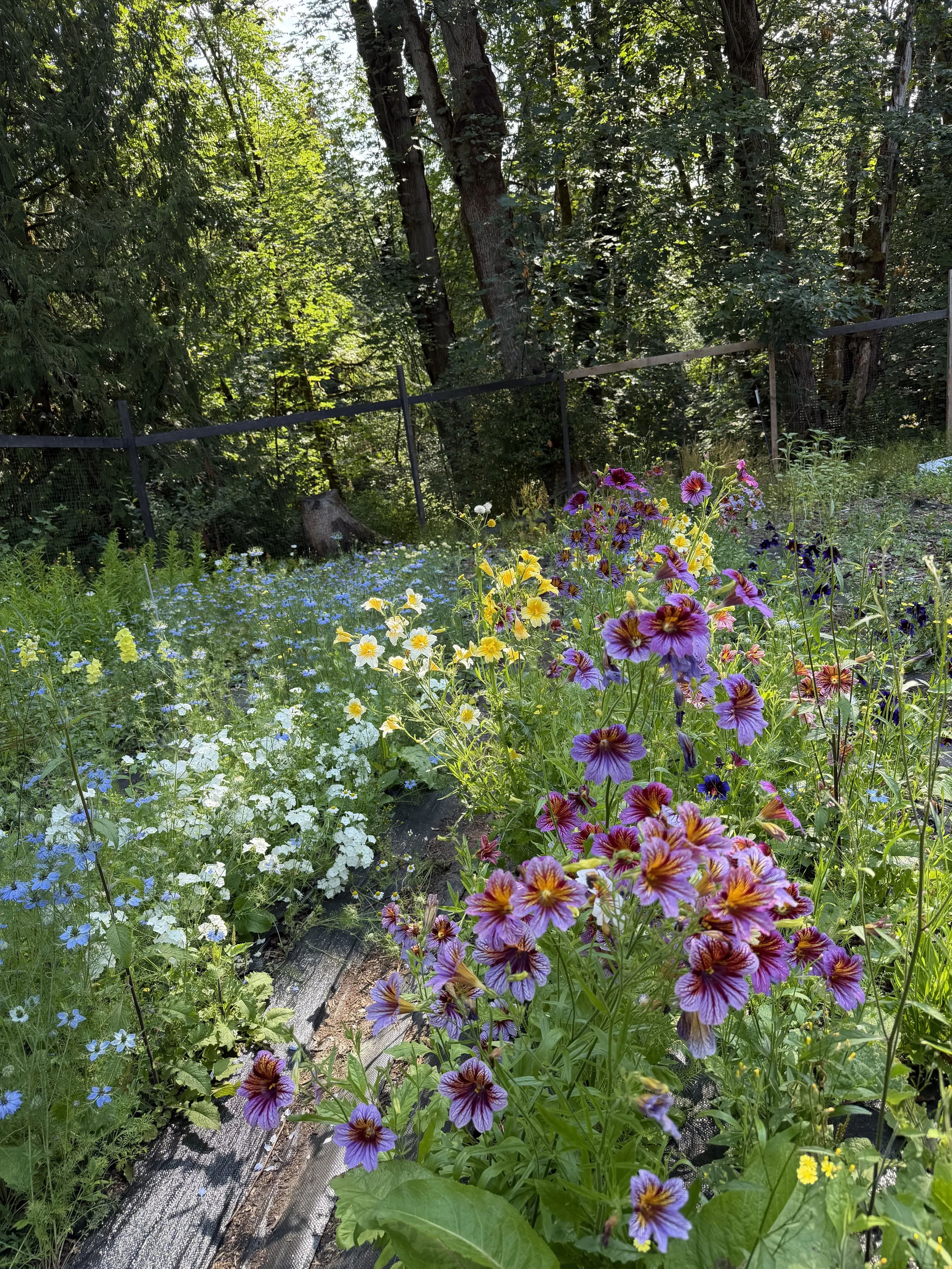
Rare and delicate salpiglossis flowers bloom at Moss & Madder Farm in Ollala, Washington.
The Kitsap Peninsula is home to dozens of flower farms, but Jodi discovered that the closest wholesale marketplace was Seattle Grower’s Market—which is far across the Puget Sound, has a membership structure more suited to large farms, and ships products from other northwest states.
Farmers in the West Puget Sound area relied on retail sales, like Community Supported Agriculture (CSA) flower subscriptions, farm stands, farmer’s markets, and wedding and event flowers. While that sales model has the positive effect of connecting farmers to their communities, customer service and transport can be exhausting on top of managing a farm. Jodi figured if they had a wholesale option, she and her new “flower friends” could move their flowers in a more efficient, cost-effective way.
Jodi didn’t have business experience, so her market research was limited, but she knew there was a gap in the local supply chain that she was determined to close. In 2024, she launched West Sound Floral Exchange, a collective of local flower farmers and floral professionals that connects growers with their customers in a wider geographic area.
On Wednesday mornings, Jodi travels in her flower bus, a small green school bus sweetly painted by artist Molly Wheat Baker, between Port Townsend, Poulsbo, Silverdale, Bremerton, Olalla, Gig Harbor, and Tacoma to collect and deliver flowers. In year two, Jodi tripled her profits and reached 20-some local farm members. But it’s the community mission that keeps her going. “I just see so much bounty around us, and so many people doing something that they love—growing things, whether it's veggies, dairy, meat, flowers, honey, anything. By buying from your neighbor, you’re helping your neighbor. There's so much we can do to support each other,” she says.
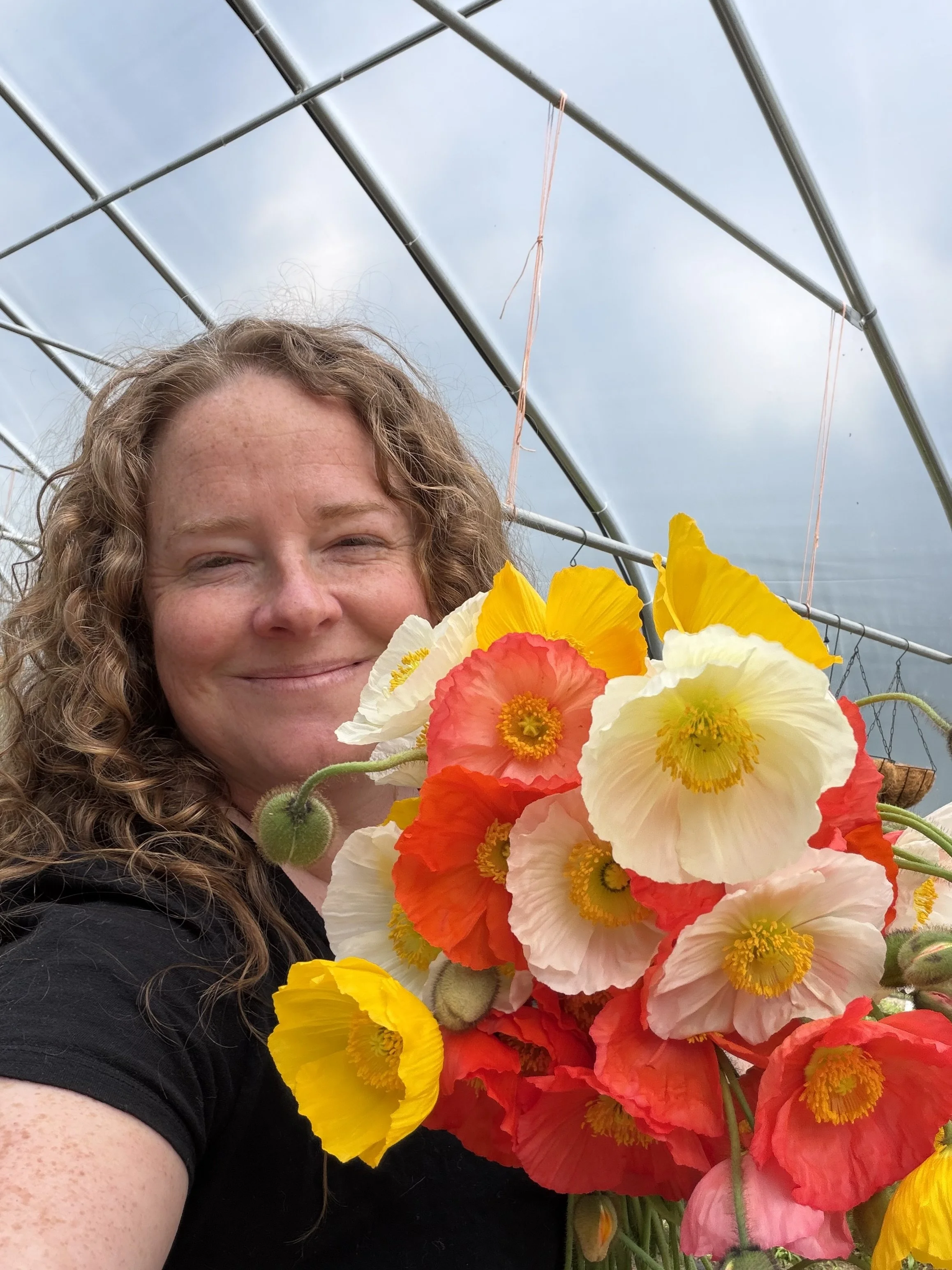
Jodi Logue with a freshly picked array of local Washington poppies.
The sustainability of small local farms is intentional, too. Jodi says almost all of the local growers who are West Sound Floral Exchange members use sustainable, organic, and even regenerative farming practices. This approach is pollinator-friendly, pesticide-free, and has a much lower carbon footprint than imported flowers.
“We are very seasonal, on purpose,” she says, explaining that to grow year-round, they’d have to have heated spaces, which are extraordinarily expensive, or start sourcing from other places. “That goes against what we’re trying to do,” she says. “We’re just trying to move the local flowers.”
Most West Sound Floral Exchange customers are solopreneuers working on weddings and events. “And most of them are women, which is really rad,” Jodi says. “A lot of these women work out of their garage, or their spare bedroom.”
Cynthia Alexander is one of the small-scale florists who source locally. She’s the sole owner and designer of Flora Tacoma, a home-based floral studio that serves the greater Tacoma area. Cynthia and Jodi met at Washington Floral in Tacoma when Jodi stopped to pet Cynthia’s dogs, Rosie and Violet. “I’ll say hi to anyone with cute dogs,” Jodi says.
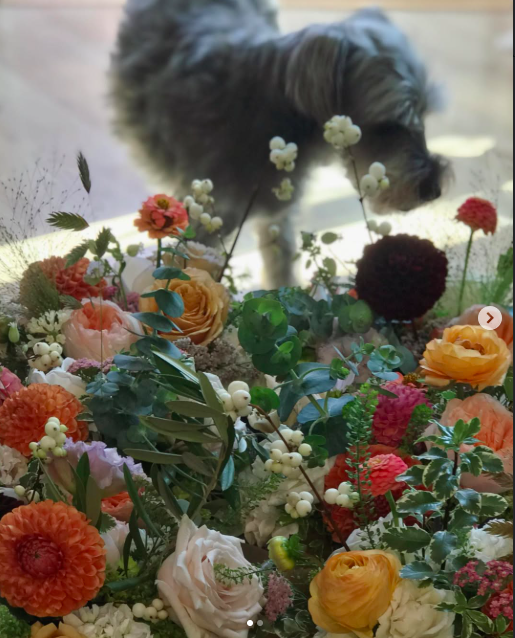
Flora Tacoma’s bounty of locally grown dahlias and garden roses with shop pup Violet.
Cynthia is a longtime supporter of small local flower farms and sustainable practices like using flower foam alternatives and recycled paper to wrap bouquets. But the flower bus made seasonal flowers so much more accessible to her as a small business owner. “I was excited that I could get more seasonal, locally grown flowers with a longer vase life, and help the farmers out too,” she says.
Jodi came to recognize Cynthia’s taste for slightly offbeat, artistic floral design using flowers that are like manifestations of her rich imagination. “I love seeing Cynthia's orders, because she always orders the weird stuff or the cool colors that maybe you know, are a little too funky for a [conventional] wedding,” Jodi says.
Those are the kind of flowers—fragile, special—that you can only buy locally and seasonally, because they don’t ship well. Salpiglossis, for instance, can’t be out of water during travel. Pansies, violas, campanula, and rare green-fill or purple-fill sunflowers that don’t have petals are also too delicate to ship, but they might be on the flower bus when they’re in season. “Last year, a few of us grew some really peculiar and strangely wonderful Italian cutting petunias,” Jodi says.
All seasonal flowers are exciting, as growers and customers alike eagerly await their favorites each year. The West Sound Floral Instagram page shows what flowers are blooming right now. Tulips and daffodils in April, peonies in late May through June, dahlias and snapdragons in late July or early August through the first frost, sunflowers and zinnias in midsummer. This info can help florists and event planners determine what flowers are in season for a September wedding in Washington, for example.
Moss & Madder Farm continues to prioritize sustainable growing practices to ensure their flowers are free from pesticides, chemicals, and pollutants and are proud to contribute to the Slow Flower Movement, which advocates for local, sustainable, and seasonal flower farming and design. Now, thanks to the flower bus, those flowers can reach more people.
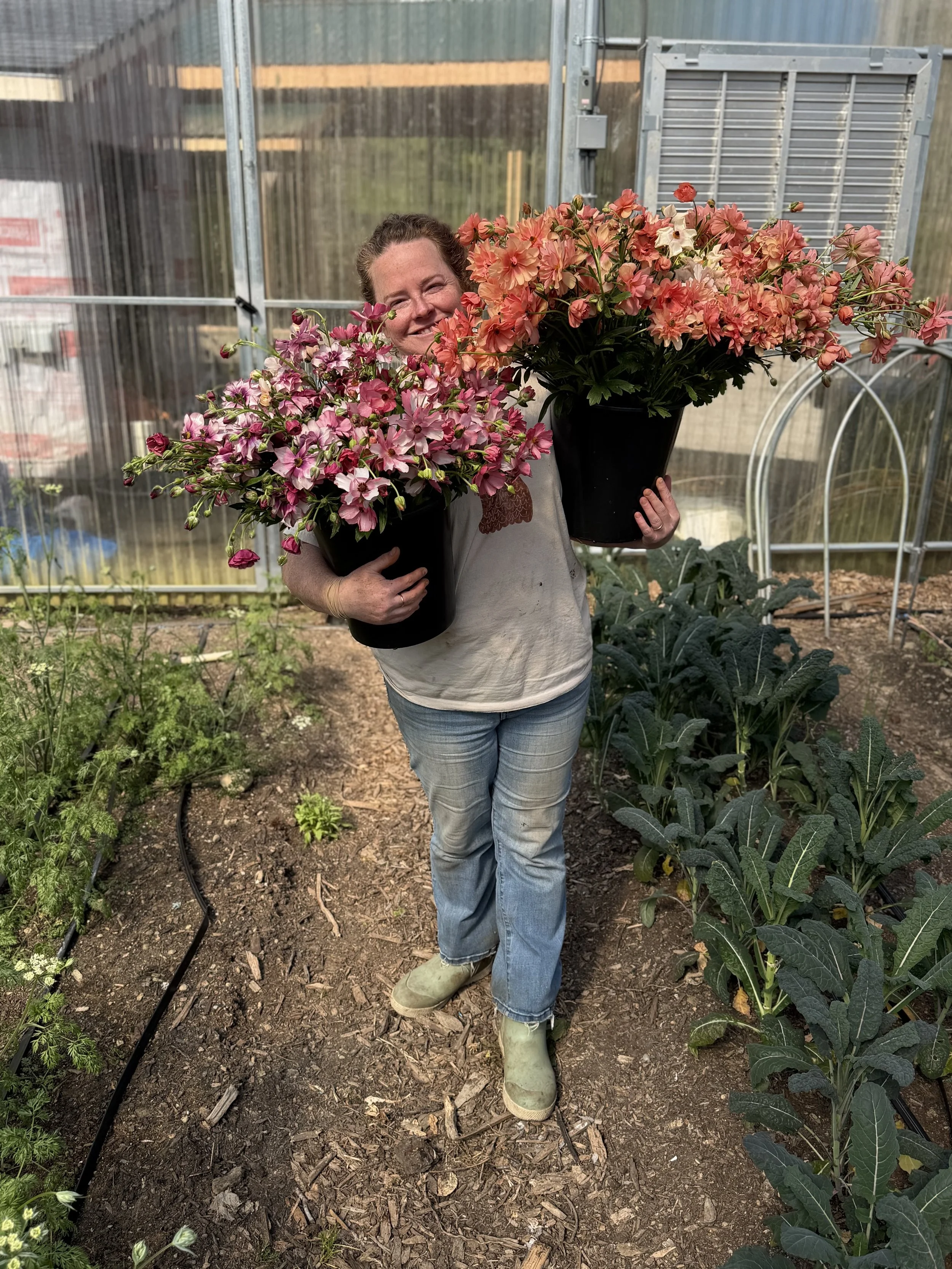
Jodi Logue with a harvest of butterfly ranunculus.
Learn more about Jodi Logue and West Sound Floral Exchange in this episode of the Slow Flower Podcast. And meet some of the local flower farmers serving the West Puget Sound region from Port Townsend to Tacoma, Washington.